


Magpies Secret Find
Join in the treasure hunt!
Clue 1
Would you like 10% off your first order purchased from our website?
Our Magpie has a secret new hidden find underneath the blue cloth. Can you guess what the vintage item is before 6pm on Saturday 23rd May, 2026. Magpies hint : 1950s era, price range £50.
Each day this week we will post a new photo clue, hidden on one of the pages on our website. On Friday we will post a final video clue, before the reveal video is posted on Saturday 23rd May, 2026 at 6pm, and the winner will be announced on the reveal video and by email ( If there is one )
You can make as many guesses as you like using the form below with your email address. The first person to guess correctly using the form on our webpage, will receive a discount of 10% at the checkout off their first order purchased from our website (Offer is valid for 1 month) starting from Saturday 23rd May, 2026.
Good luck
David & Marie
Rules
* You must be over 18 to enter.
* You must be a UK resident.
* email addresses will only be used to notify the winner of Magpies secret find to claim their 10% discount.
* You can enter as many of our competitions as you like, but the maximum you can win is 10% off your first order purchased from our website.
* Winner receives 10% off their first purchase. Discount valid for 1 month.

Clue 3 is hidden on our website, with an accompanying riddle to help you out

Real or Fake?

Determining the Authenticity of a Tiffany Lamp
Is this Tiffany lamp real or fake? Let’s look for the clues. To ascertain whether a Tiffany lamp is genuine, there are several key factors to consider. First, examine the lamp’s signature. Authentic Tiffany lamps are often marked with the name "Tiffany Studios" or have a distinctive signature on the base or shade. Next, pay attention to the materials used; genuine Tiffany lamps typically feature high-quality glass and metal components. Look for the intricate craftsmanship that characterises real Tiffany pieces, such as detailed soldering and a rich colour palette in the glass. Additionally, consider the lamp’s provenance; if it has a documented history or comes from a reputable dealer, it may be more likely to be authentic. Lastly, consult with experts or appraisers who specialise in Tiffany lamps to verify its authenticity.
What are your thoughts, is this real or fake ?
Answer on the form below if its real or fake. If your guess is correct you will receive 10% off your first order purchased from our website.
* Email addresses are only used to contact you if you are correct.
10% max off your first order.
* You can enter as many of our competitions as you like, but the maximum you can win is 10% off your first order purchased through our website.
VICTORIAN ELEGANCE
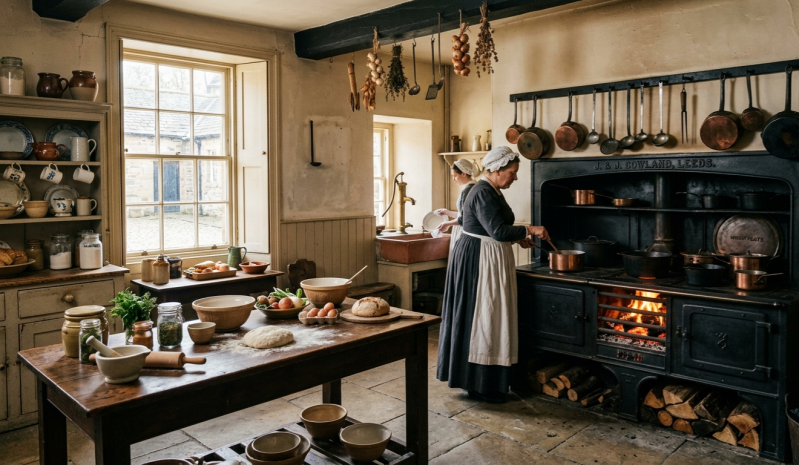
Victorian Kitchen Appliances: A Touch of Elegance
The Victorian era, spanning from 1837 to 1901, was a time of remarkable innovation and design, and this period significantly influenced kitchen appliances. Victorian kitchen appliances are characterised by their intricate designs, ornate details, and a blend of functionality and aesthetics. During this time, the kitchen began to transform from a purely utilitarian space into a more refined area of the home, reflecting the growing importance of domestic life. One of the most notable appliances from the Victorian kitchen is the cast iron stove, which replaced the traditional open hearth. These stoves were not only efficient for cooking but also featured decorative elements that added a touch of sophistication to the kitchen. Many came with intricate tiles or brass fittings that showcased craftsmanship. In addition to stoves, the Victorian kitchen often included a variety of other appliances such as iceboxes, which were essential for food preservation before the advent of modern refrigeration. These iceboxes were typically made of wood and lined with zinc or tin to keep the ice from melting too quickly. The introduction of the kitchen sink also marked a significant change in Victorian kitchens. Sinks were often made from porcelain or stoneware and featured elaborate designs, reflecting the era's attention to detail. Moreover, the Victorian period saw the rise of kitchen gadgets that made food preparation more efficient. Items like hand-cranked egg beaters, meat grinders, and butter churns became popular, showcasing the era's blend of practicality and style. Overall, Victorian kitchen appliances were not just tools but also statements of elegance and sophistication. They played a crucial role in shaping modern kitchen design, influencing the way we think about kitchen appliances today. By incorporating these vintage elements, one can create a kitchen that is both functional and rich in history.
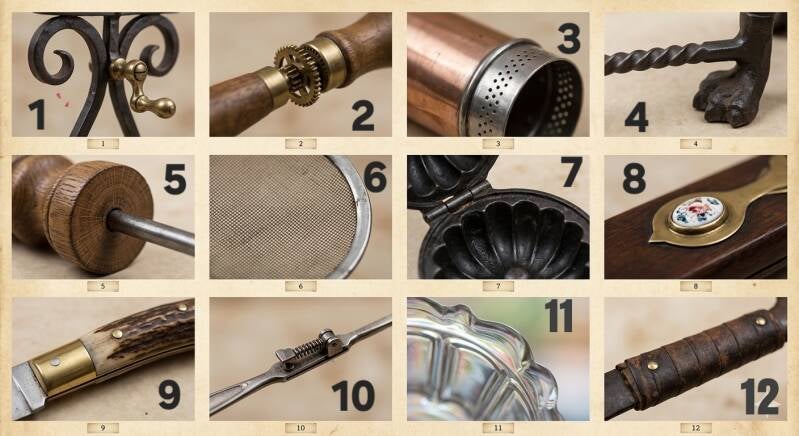
Identify these Victorian kitchen appliances and receive a 10% discount off your first order purchased through our website.
* You can enter as many of our competitions as you like, but the maximum you can win is 10% off your first order purchased from our website.
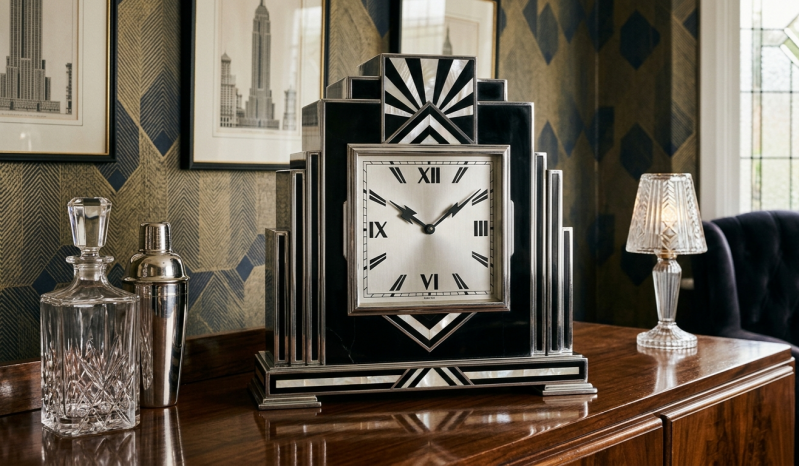
Which era is this mantel clock from ?
Early Clocks: A Journey Through Time
Early clocks were fascinating inventions that marked a significant advancement in human history. Before the advent of mechanical clocks, timekeeping was primarily based on natural phenomena, such as the position of the sun and the changing phases of the moon. The earliest timekeeping devices, known as sundials, used the sun's shadow to indicate the time of day. These simple yet effective devices date back to ancient civilisations, including the Egyptians and Greeks.
As societies evolved, so did the need for more precise timekeeping. The introduction of water clocks, or clepsydras, in ancient China and Greece allowed for more accurate measurement of time, as they relied on the steady flow of water. However, it wasn't until the Middle Ages that mechanical clocks began to emerge. These early mechanical clocks were often large, intricate devices installed in church towers and public squares, serving not only as timekeepers but also as public announcements of the hour.
By the 14th century, advancements in clockmaking led to the development of the escapement mechanism, which allowed for more precise timekeeping. This innovation paved the way for smaller, portable clocks. The 15th century saw the creation of spring-driven clocks, which made it possible to produce smaller timepieces that could be used in homes. The invention of the pendulum clock in the 17th century by Christiaan Huygens further revolutionised timekeeping, increasing accuracy to within seconds.
Throughout the centuries, clocks have not only played a crucial role in our daily lives but have also become symbols of status and artistry. Ornate designs and craftsmanship in clockmaking became highly valued, leading to the creation of stunning pieces that showcased the skill of artisans. Today, while technology has transformed how we keep time, the legacy of early clocks remains evident in our modern timekeeping.
Which era is this beautiful mantel clock from ?
Answer on the form below to receive a 10% discount off your first order purchased from our website.
* Email addresses are only used to contact correct answers, to claim their 10% discount
* You can enter as many of our competitions as you like, but the maximum you can win is a 10% discount off your first order purchased from our website.