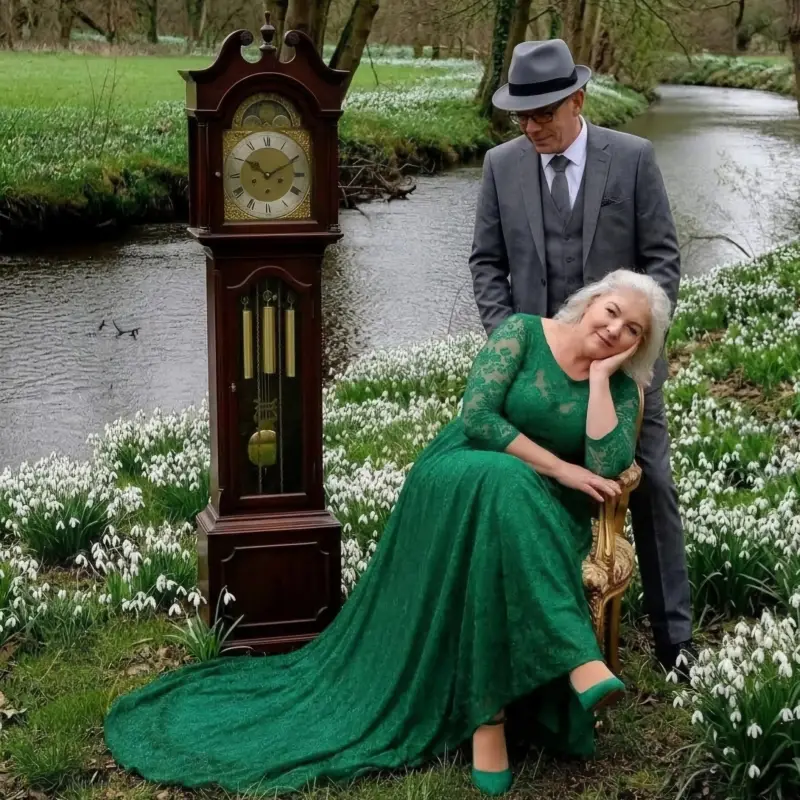
Founders David and Marie Collins at Margam Park, South Wales
Our journey of discovery
Our story
We are a dedicated team committed to the search for treasure come rain, shine or snow.
If you guessed we are both a little eccentric-you guessed correctly.
Marie's background includes admin and business support, whilst David served in the RAF and South Wales Police.
We are also both fueled by a desire to seek out a special piece, that was left behind by a previous owner, who clearly treasured and loved the piece, because its still in relatively great condition and thats where we come in, we don't leave the piece sitting on some forgotten dusty table at a vintage fair, we take it home with us, research it and find the perfect new owner to pass on to the next generation, that only adds to its journey over the years, we in turn become part of its story and eventually part of its history.
Treasured memories
We are David and Marie Collins and we like to hunt down treasured memories.
We set off from our home in Port Talbot, South Wales with our Labrador, Dylan on a journey of discovery.
We're searching for memories. As people, we have a habit of holding onto something that reminds us of a precious person we have lost, or a generation gone by, to us its real treasure, it might not be valuable in a money sense, but to us its priceless.
Research
We like to find out as much as we can about the story of a piece that has peaked our interest.
We find it, we clean it up a little, we research it, we cherish it until it finds a new home, where it will become part of that families history and that piece will then continue on its journey to the next generations.
Us


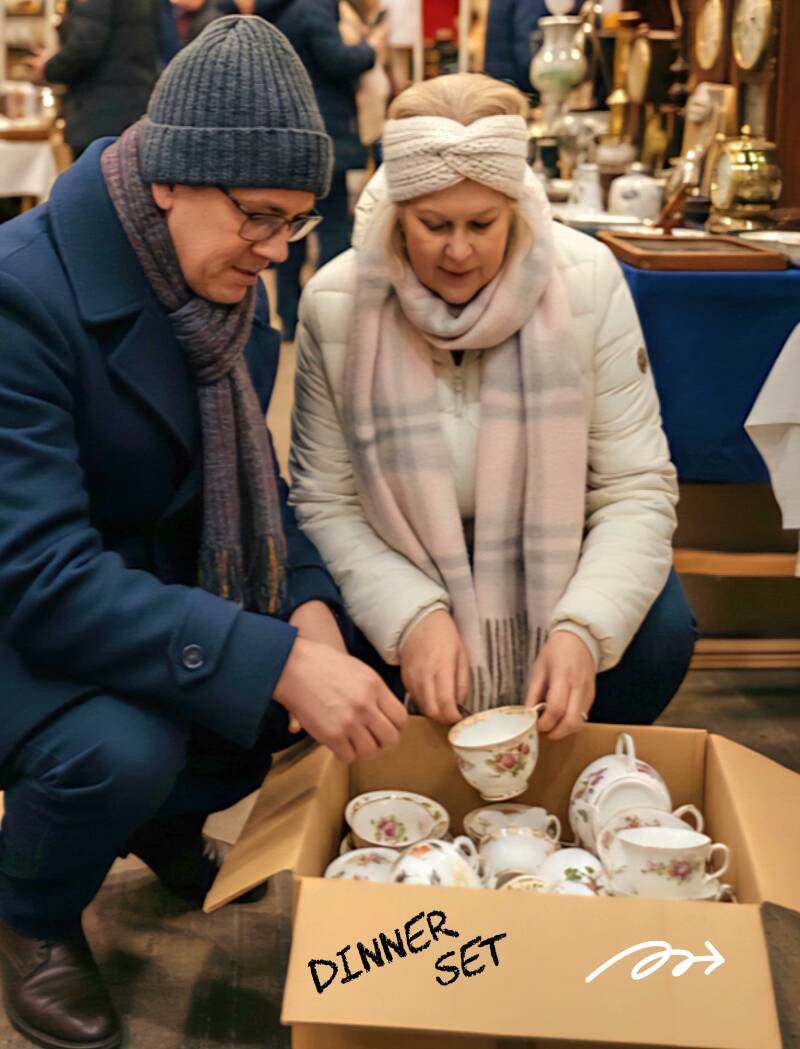

Follow our Facebook and Instagram page to watch our Vintage Vault Talk series, where we chat and discuss different Vintage and Antique subjects.
Moving Forward
In 2027 we will be expanding our business to house and estate clearance. Using our sister Company Magpies Valley Property Clearance. We are covering South Wales. We will be rescuing unique treasures, collectables and jewellery. Then selling them all on here to you at reasonable prices.

Papermache doll
Japanese Itchimatsu Papermache Doll
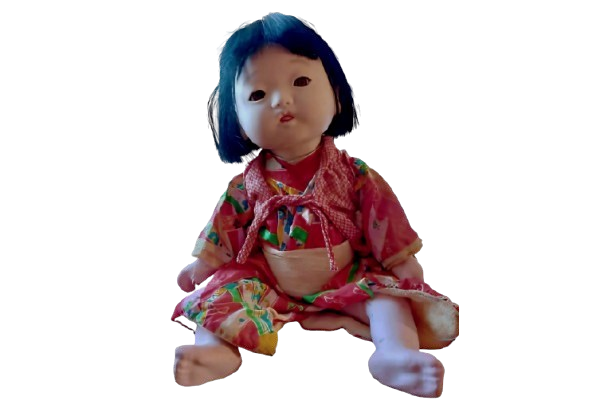
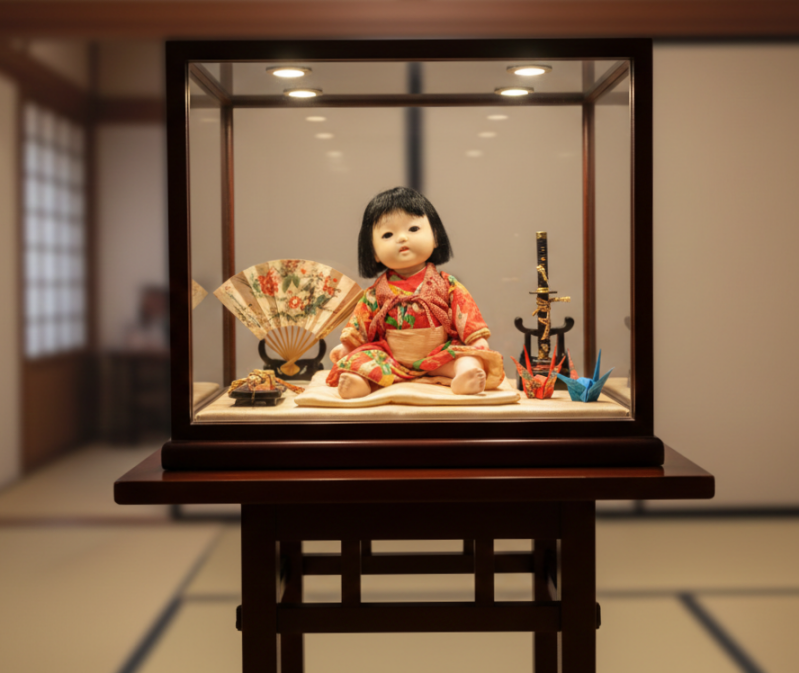
A memorable find : The Japanese doll
In Bristol, Marie was particularly drawn to a Japanese doll. With her beautiful, almost white, cold face, tiny tongue, glass eyes, and dark real hair, she was captivating. Despite loose joints, which David could mend, he did restring her, she was wearing a stunning handmade red kimono with delicate stitching was exquisite. They knew she was going back home to Wales with them.
"I could not wait to research her - i found her fascinating and was totally besotted with her.
I discovered she was a handmade, handpainted, Papermache Japanese Itchimatsu doll.
I had so many questions I would have loved to ask the doll maker, how long did she take to make ? How many dolls can you make a day ? How do you make her glass eyes look so real? and that cute little tongue ?
She has a squeaker in her tummy that has sadly fallen silent, and I had found a piece of Japanese newspaper next to her squeaker, I placed it back inside, fortunately, we dont throw away anything found with the piece.
The dollmaker placed the newspaper there with the date she was made. How sweet was that!
This handmade dolls journey had begun in Japan in the 80s, im not sure when she arrived in the UK or how she ended up in Bristol, then she travelled to Wales with us.
She had been loved and cherished once, her tiny thumb had been sucked away by a child holding onto her tight at night in her little bed.
We placed her in auction just before Christmas 25, not long after our summer launch. She was sold and flown to her new owner in Italy and so her journey continues."
- Marie
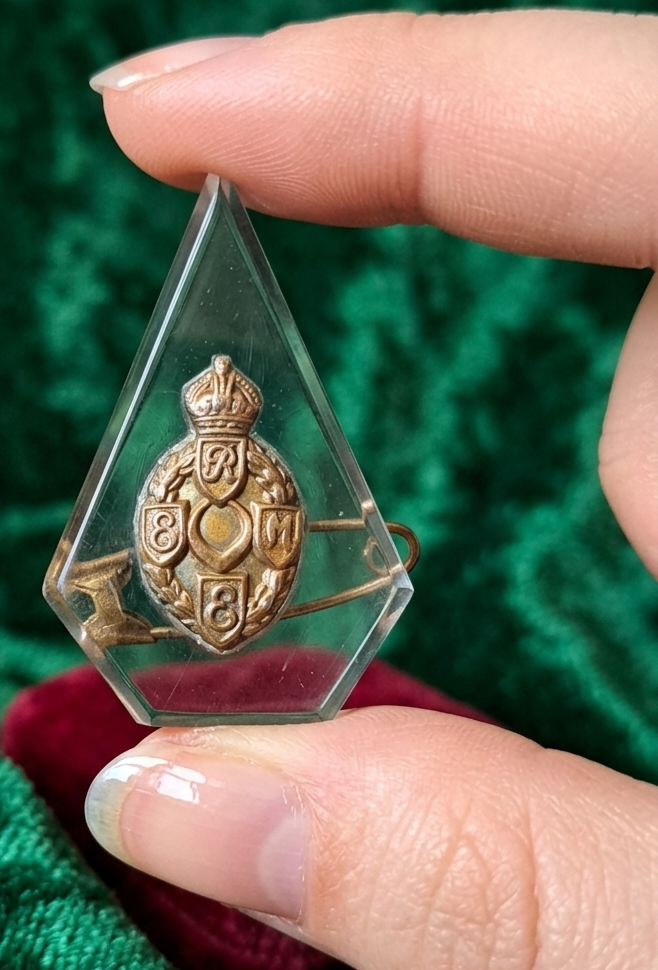
1943 Sweetheart Brooch

Davids favourite piece so far, no surprises as he served in the RAF, he was stationed in Biggin Hill, Aldergrove, Marham, Bruggen Germany, Shawbury, Falkland Islands, and Sardinia Decimonannu - is this beautiful and historical 1943 Sweetheart brooch from 1943.
"The brooch was passed down through family from the Great Grandmother, through the generations, it always went to the eldest daughter, until there was no one left in that family to pass the brooch onto.
It happens alot more than people realise, but its usually a gold pocket watch or mantel clock.
This piece fascinates me more than gold because its made from plexiglass, the salvaged windscreens from aeroplanes, you could be wearing a piece of a Spitfire or Hawker Hurricane, now thats a conversation piece at any party!
The brooches were made by the servicemen for their loved ones, before they deployed.
This particular brooch carries the brass crest of the REME
(Royal Electrical and Mechanical Engineers) and it even still has its original safety pin intact on the back
Now thats a real piece of treasure!"
- David

The Changing Decades
Been there, done that!
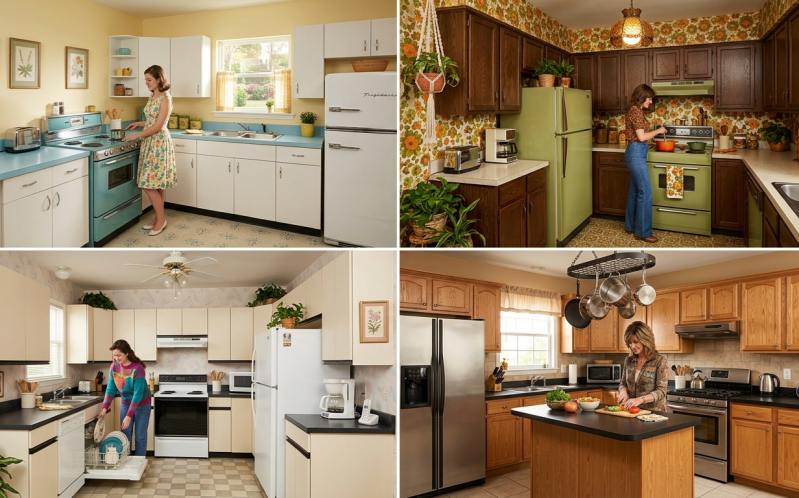
The Evolution of Kitchens in the UK: 1960s to 1990s
We've been around since the 60s and still remember our grandparents kitchens. They were pretty basic and functional back then and always blue or yellow! But we both adored them, simple and clean cut, i miss the pantry or larder, but everything changes.
The changes in kitchens throughout the 60s, 70s, 80s, and 90s in the UK reflect broader social and technological shifts. In the 1960s, kitchens were often seen as purely functional spaces. They featured simple designs with a focus on practicality, utilising materials such as laminate and vinyl. The introduction of built-in appliances began to change this perception, making kitchens more efficient and user-friendly.
By the 1970s, the kitchen started to emerge as a social hub. Open-plan designs became popular, allowing families to interact while cooking. Bright colours and bold patterns dominated the decor, with avocado green and mustard yellow being particularly trendy. Kitchen units began to adopt a more modular approach, enabling homeowners to customise their spaces more easily.
The 1980s brought about a significant shift towards modernisation. The rise of technology introduced new appliances, such as microwaves and food processors, which transformed cooking habits. Kitchens became more sophisticated, with an emphasis on sleek lines and minimalist designs. The use of materials like granite and stainless steel started to gain popularity, giving kitchens a more contemporary feel.
In the 1990s, the focus shifted towards creating a warm and inviting atmosphere. The concept of the "family kitchen" took hold, with designs that encouraged gathering and socialising. Traditional elements, such as wooden cabinets and farmhouse sinks, became popular, blending modern convenience with classic charm. The kitchen was no longer just a place for cooking; it had evolved into the heart of the home, reflecting personal style and lifestyle choices.
Throughout these decades, the kitchen in the UK transitioned from a simple workspace to a multifunctional area that embodies comfort, style, and innovation, showcasing the changing dynamics of family life and societal norms.
Connecting past and present
We hope that when you find a treasure from Magpies Treasures UK, it sparks a memory. Perhaps it reminds you of something your gran had or a toy you played with as a child. Our aim is to transport your imagination back to simpler times, helping you rediscover cherished childhood memories and connect with generations past. These special pieces are more than just objects; they are gateways to nostalgic smiles.
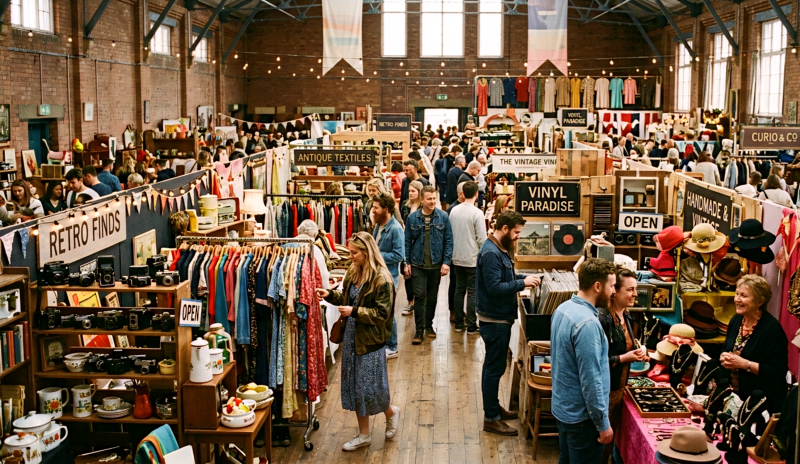
Treasure Hunting in Devon